EMC DESIGN & REVIEW | US BASED

Identify and resolve EMC risk at any stage of development.

BeaverCreek Engineering helps hardware teams navigate compliance from early PCB layout reviews to root-cause failure analysis and remediation.

US-based engineering · Secure handling for sensitive programs · Reviews start in as little as 2 business days

Roughly half of products fail their first formal EMC test. Here’s what that typically costs.

The good news: once root causes are understood, retest failure rates drop to around 5–7%. The expertise is the same before or after the lab. Before the lab is just far cheaper.

Figures drawn from published industry sources; individual results vary. Sources →

Hardware teams lose months to preventable EMC failures.

Late discovery means expensive rework, repeated lab fees, and launch delays.

Design decisions that haunt the lab

Stackup, routing, and grounding choices are made early, but the consequences aren't discovered until testing.

Repeat certification cycles

Walking into the lab without a clear test strategy often leads to costly surprises and schedule-killing board respins.

Guesswork during remediation

When a board fails, teams often struggle to isolate the root cause and apply the correct fixes to the layout.

Sensitive data restrictions

Regulated, defense, or restricted hardware programs require a secure, fully US-based engineering partner.

What a structured EMC partnership changes

01

Less redesign after layout

Set the right architecture early, and catch layout issues while changes are still cheap and practical.

02

Fewer surprises in the lab

Walk into the lab with a solid test strategy and a clear understanding of your hardware's risks.

03

A faster path to compliance

Whether securing first-pass success or recovering from a failed test, get the exact actionable fixes needed to ship on time.

What our engagements cover

Pick one step or combine them. Each engagement is scoped to where your project is today.

Architecture & Placement

Define your stackup, critical component placement, and routing constraints to minimize EMC risk before routing even begins.

Learn more →

Comprehensive Layout Review

Catch return path, grounding, and decoupling issues before fabrication with a detailed, annotated report of fix recommendations.

Learn more →

PCB Layout Remediation

Save your team time by having our engineers apply the recommended corrective actions and routing fixes directly in your design files.

Learn more →

Test Strategy & Failure Analysis

Walk into the lab with a custom test plan built around your operating modes, or get rapid root-cause analysis if a board fails certification.

Test strategy →Failure analysis →

Advisory Support

A second opinion, a quick design question, or a sounding board for a decision. Email responses within one business day.

Learn more →

Real boards, real findings

What we find in real layout reviews, and how we recommend fixing it.

Dual BLDC motor controller

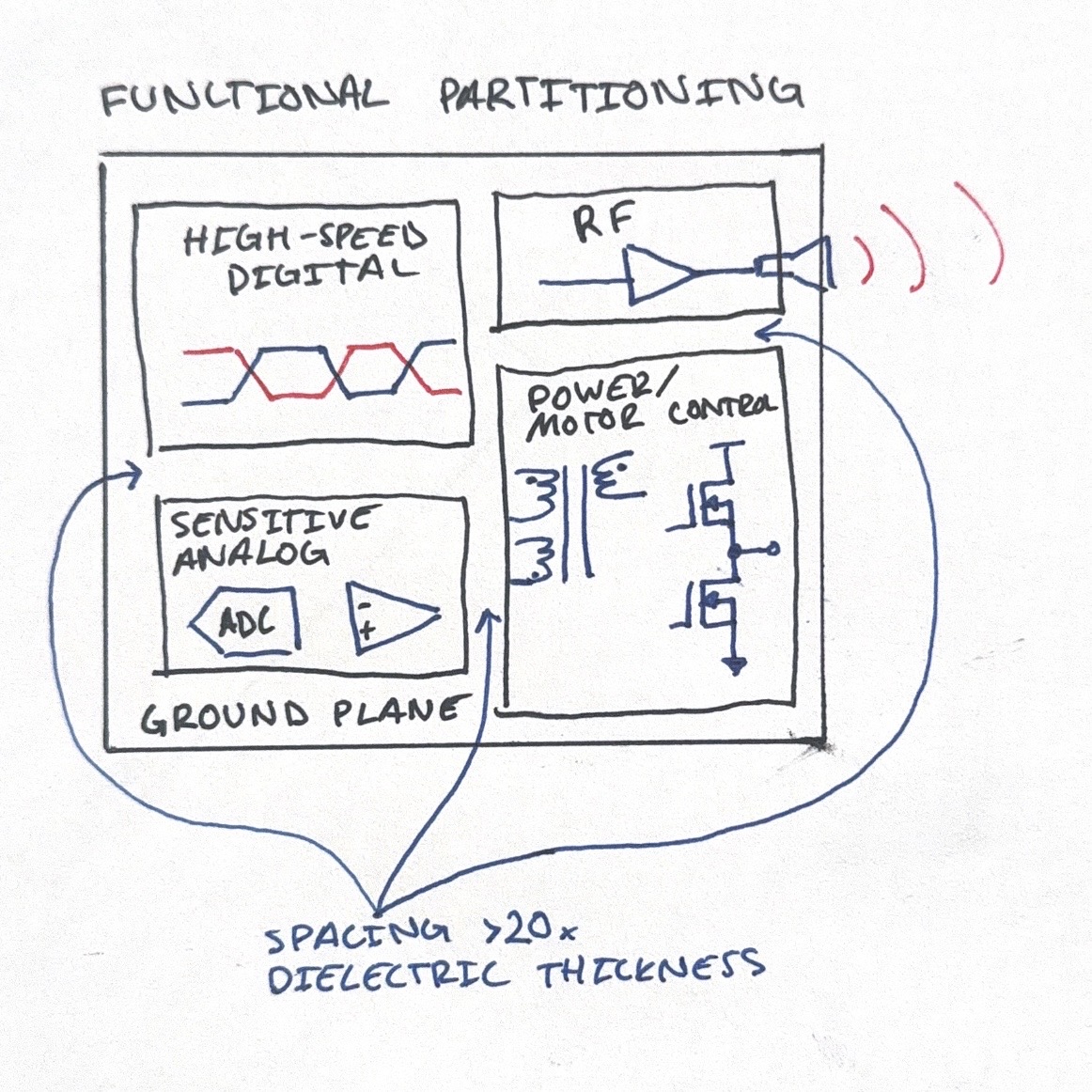
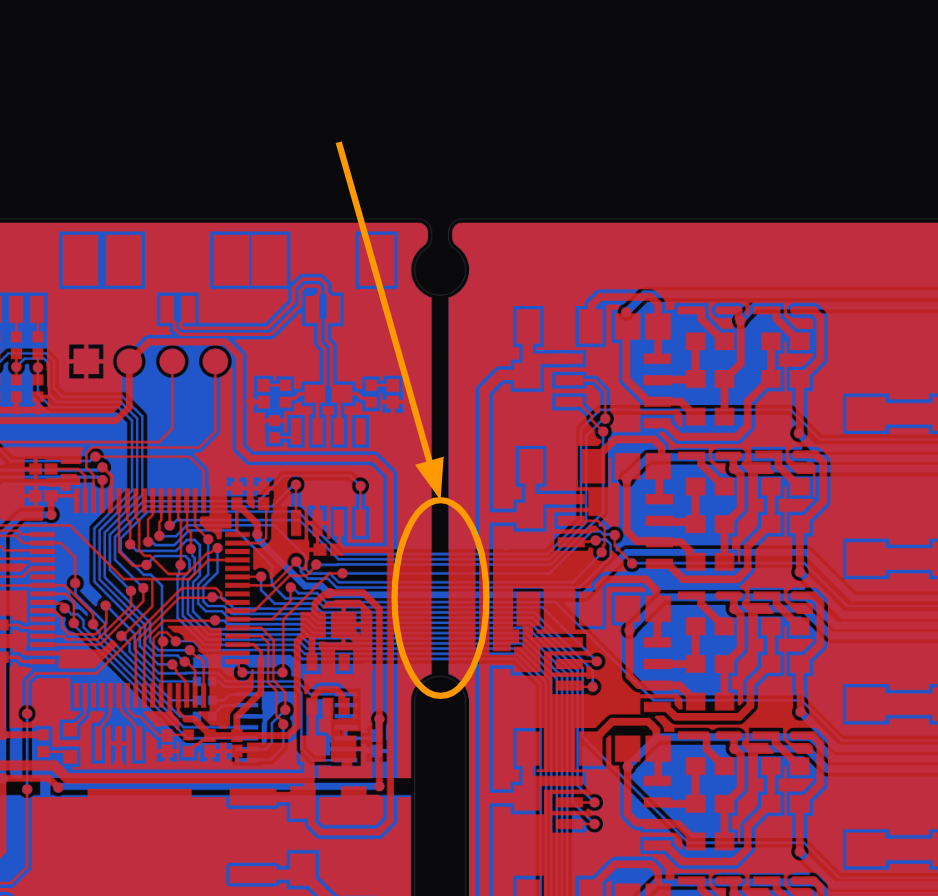
Fast-edge PWM and sensitive analog signals were routed across a split in the reference copper that ran to the board edge. The result: uncontrolled return currents, radiated emissions risk, and noise coupling into the motor-control measurements. The recommended fixes: a continuous reference plane, strict partitioning, and a routed return where continuity wasn’t possible.

Read the full analysis →

Four-layer board with a flooded top layer

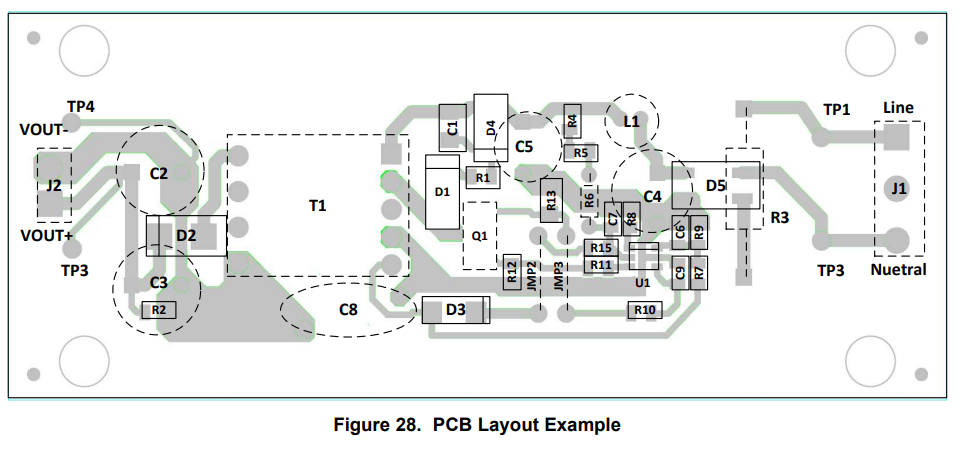
The top signal layer was flooded with ground copper even though Layer 2 already provided a solid reference plane. The pour formed poorly stitched islands and peninsulas that can resonate, disrupt return paths, and shift trace impedance. The recommended fix: remove the redundant pour, or stitch whatever remains tightly to the reference plane.

Read the full analysis →

Layer 4 signals over a reference void

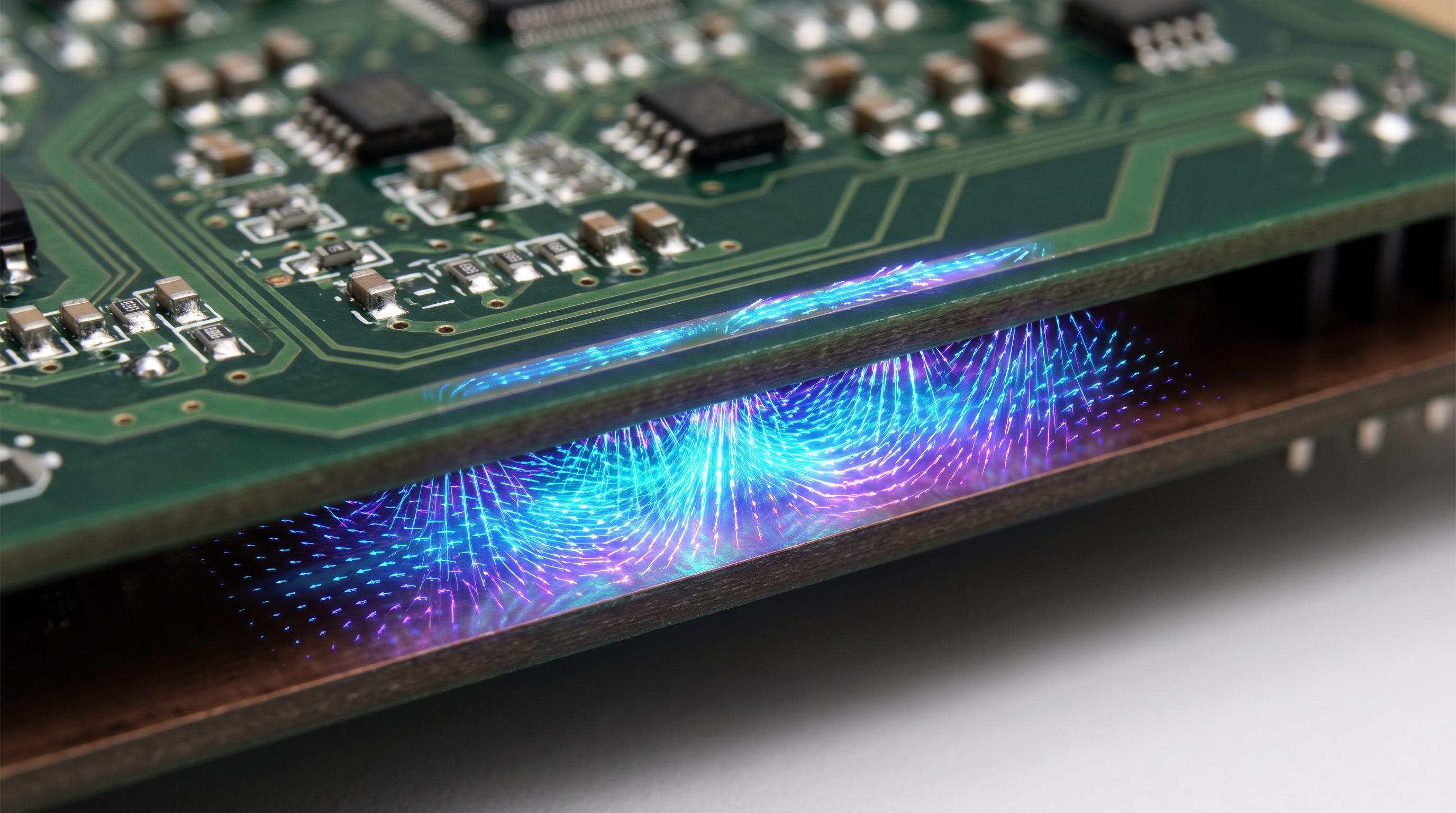
Four signals on Layer 4 ran directly over a void in the Layer 3 reference copper that extended to the board edge. Return currents had to detour around the void, increasing loop area and letting fields spread toward the edge. The recommended fix cost nothing: shift the traces onto solid reference copper before fabrication.

Read the full analysis →

Build your project package

Every project is at a different point. Tell us where yours is, and we'll suggest a set of steps to get across the finish line. Adjust it, then book a call to confirm scope.

Build your path to compliance

Takes about two minutes. No commitment.

FAQ

When should we bring you in?

As early as you can. Stackup, placement, and grounding decisions are cheapest to change before routing is complete, and published industry figures put an early design change in the low thousands of dollars versus orders of magnitude more near production. The ideal time is an Architecture Review before routing is done. If you’re past that, a Layout Review before design lock is the next best step. And if a board has already failed testing, we start with Failure Analysis & Mitigation.

Do you replace lab testing?

No. Formal certification testing still happens at an accredited lab. Our goal is to improve your odds of passing the first time and to make sure the lab time you pay for goes to the right tests, in the right operating modes.

Can you guarantee we’ll pass?

No one can honestly guarantee a pass, and we won’t. What we can do is find the layout and test-planning problems that most often cause failures while they’re still cheap to fix, and give you a clear, prioritized list of what to change.

What kinds of products are the best fit?

Certification-bound electronics, regulated hardware, industrial and motor-control systems, power electronics, and sensitive programs where a late EMC failure is unacceptable.

Can you work with restricted or sensitive projects?

Yes. All work is performed in the United States. If your program involves export-controlled data (ITAR/EAR) or controlled unclassified information, tell us up front so we can confirm requirements before you share anything.

What do you need from us to get started?

For most reviews: your schematic, bill of materials, and board outline or Gerbers. Each engagement’s exact needs are listed on the Services page. If you don’t have everything yet, start anyway and we’ll tell you what’s missing.

How long does it take?

Turnaround starts at 2 business days for an Architecture Review; 3 for a Layout Review, Layout Remediation, or Failure Analysis; and 5 for a Pre-Lab Test Strategy. Timing increases with project complexity, and we confirm it when we scope your project.

Can you work in our design tools?

Reviews are done from standard outputs (schematic, BOM, Gerbers), so you don’t need to share your CAD environment. For remediation, we apply fixes directly in your design files.

Our board already failed. Where do we start?

With Failure Analysis & Mitigation. Send your test results along with the schematic, BOM, Gerbers, and enclosure design. You’ll get a root-cause analysis, corrective actions, and a plan for follow-on testing.

Can we just ask a question?

Yes. Advisory Support covers anything from a quick design question to ongoing guidance. Email responses come within one business day, and pre-paid advisory hours are available.
Let's secure your path to compliance.

Whether you need an early architecture review or urgent help with a failing board, tell us about your project. We'll help you map out the right next steps.

Please don’t attach design files yet. We’ll set up secure file transfer once we’ve talked.